


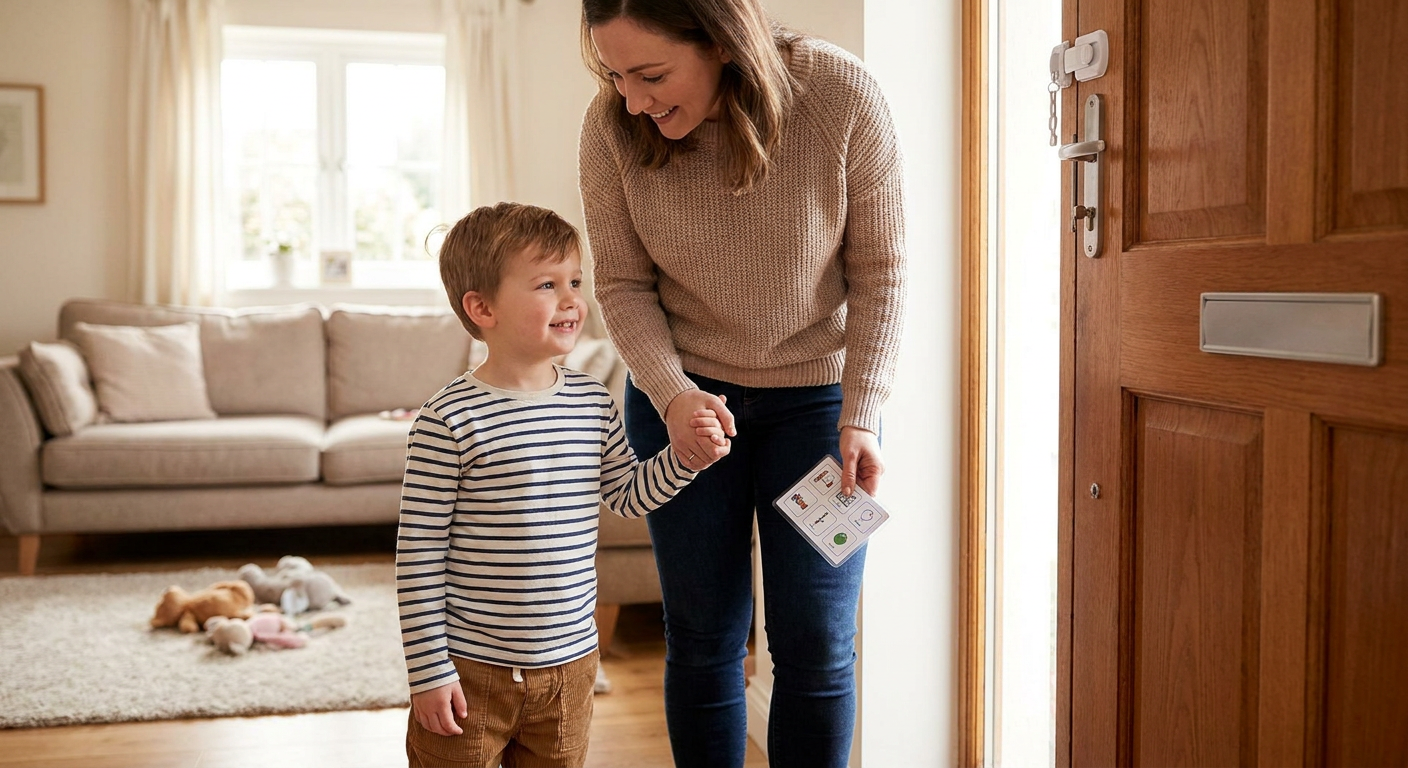
If your child has ever slipped toward the front door, darted across a parking lot, or headed straight for water before you could react, you know how fast fear can take over. A single close call can change the feel of everyday life. Simple routines like unloading the car, answering the door, or moving through a store can suddenly feel high stakes.
That is why autism elopement prevention needs to be practical. Families do not need vague reassurance or a long list of tips that all carry the same weight. They need a clearer way to understand why wandering may be happening, where risk is highest, and what changes will make the biggest difference first.
This guide walks through that process. The goal is not to create a perfect system overnight. It is to build a layered safety plan that fits your child, supports your daily rhythm, and helps everyone involved respond more consistently.
What Elopement in Autism Means and Why Prevention Needs Layers
Elopement, sometimes called wandering, means a child leaves a safe setting or adult supervision in a way that creates real danger. In autism, that may look like leaving the house, moving quickly through a store exit, crossing a parking lot, or heading toward a preferred place without stopping when called.
What makes this challenging is that elopement usually is not caused by one thing, and it rarely improves with one tool alone. A younger child may have limited safety awareness or limited language to ask for help. An older child may be faster, more determined, or more likely to head for a familiar destination. Some children leave during stressful transitions. Others move toward something they strongly want, like water, a playground, or a familiar route.
That is why prevention works best when it is layered. The CDC’s guidance on wandering safety reflects the same idea: families usually need environmental planning, adult coordination, and emergency readiness working together.
If outings and public spaces are part of the bigger picture for your family, our guide to feeling more prepared in public places offers broader support. This article stays focused on elopement risk specifically.
The ROAM Safety Map: A More Useful Way to Plan
A helpful prevention plan starts with four questions: Why is your child leaving, where are the openings, what needs to change, and who needs to stay aligned? You can think of that as the ROAM Safety Map.
R: Reason
Start with the likely reason behind the behavior. Some children wander to get away from something, such as noise, waiting, demands, or a transition that feels too hard in the moment. Others move toward something they want, like a preferred location, a sign they recognize, a car, or a body of water. Some children leave when they are overwhelmed and do not yet have a reliable way to say, “I need a break.”
For example, a preschooler may run from circle time because the room feels too loud. An older child may head straight for the elevator because the route is familiar and rewarding. When families understand the likely pattern, they can choose supports that make more sense.
This does not mean parents have to figure out the exact function on their own. It simply means the “why” matters. If elopement is happening often, happening fast, or becoming harder to interrupt, a BCBA or behavior support professional can help assess what is driving it and what supports are most likely to create meaningful progress.
O: Openings
Next, look for the openings. That includes obvious physical exits like doors, gates, store entrances, parking lots, and playground boundaries. It also includes moments when risk tends to spike: school pickup, bedtime, caregiver handoffs, moving from a preferred activity to a non-preferred one, or any rushed part of the day when adults may assume someone else is watching.
For younger children, openings often show up during busy routines and sudden changes. For older children, risk may be tied to highly familiar routes, bus areas, community transitions, or strong destination-seeking patterns.
Families often make the fastest progress when they stop thinking only about locations and start noticing timing, routines, and repeated sequences.
A: Adjustments
Once the reasons and openings are clearer, it becomes easier to choose the right adjustments. Depending on the child and the setting, that may include door or gate safeguards, visual stop cues, transition warnings, first-then language, safer waiting routines, communication supports, closer supervision in high-risk moments, or identification and tracking tools.
The important part is fit. A stop sign on the door may help one child and mean very little to another. A tracker may add protection, but it is only one layer. The strongest plans are tailored. They match the child’s age, communication style, sensory profile, and real-world routines instead of relying on a one-size-fits-all fix.
M: Mobilize the Team
Even a thoughtful plan can break down if only one adult understands it. Parents, therapists, school staff, babysitters, grandparents, respite workers, and trusted neighbors all need the same basic picture: when risk is highest, what the child is likely moving toward or away from, what helps them regulate, how they communicate, and what to do if they leave a safe area.
This matters most during transitions. If one caregiver knows a child tends to head for doors during loud handoffs and another does not, that gap becomes a safety issue.
If your child’s support team includes school staff, our articles on aligning school plans with home therapy and keeping home and classroom support connected can help that partnership feel more consistent.
High-Risk Situations to Plan For First
Some situations deserve attention before everything else because they combine speed, unpredictability, and immediate danger.
Front-door exits are a common starting point. They often happen during busy household moments when adults are cooking, unloading groceries, helping a sibling, or answering the door.
Parking lots carry obvious risk because there is little time to react. Store entrances and exits can be just as difficult. Automatic doors, visual stimulation, crowds, and access to preferred items can all increase the chance of bolting.
Playground transitions are another common pressure point, especially when a child is leaving a preferred activity. Water-related settings deserve especially careful planning because some autistic children are strongly drawn to pools, ponds, fountains, or beaches. Nighttime wandering can feel especially frightening because fewer adults are actively alert and visibility is lower.
Caregiver handoffs also matter more than many families expect. If expectations are not clearly stated in that moment, risk can rise quickly.
For younger children, close-proximity supervision and simple routines usually matter most. For older children, destination patterns, route awareness, and consistent stopping routines may become a larger part of the plan. If sudden changes tend to trigger movement, our article on handling unexpected changes more smoothly offers related support without repeating the full safety plan here.
Prevention Strategies at Home, in the Car, and Out in the Community
It often helps to think in stages instead of trying to solve everything at once.
Today:
Identify the top two or three situations where risk is highest. Look at doors, gates, bedtime routines, and the moments when supervision feels least clear. Choose one communication support your child can use reliably, such as a simple phrase, gesture, visual, or break card.
This week:
Tighten the routines around entering and leaving the car, walking through parking lots, moving through store doors, and leaving preferred places. Decide in advance which adult is responsible in each high-risk setting. If identification support would help, this is a good time to add an ID bracelet, card, or label with current contact information. If you use tracking tools, treat them as one layer inside a broader plan, not as the whole solution.
Ongoing:
Review near-misses as seriously as full incidents. Small patterns are often the best clues. Update the environment as your child’s speed, size, and independence change. Practice safety routines when your child is calm, not only in stressful moments.
If outings need more structure, our guide to planning field trips and excursions more smoothly can support community planning in a way that still fits family life.
Sometimes prevention steps help, but risk still stays high. In that case, families may need more support around communication, regulation, and behavior planning, not just better locks or better reminders. If you want a clearer sense of how that larger process works, this overview of ABA therapy explains how support can be tailored across home, school, and community settings.
How to Coordinate Elopement Prevention With School and Other Caregivers
A prevention plan becomes much more useful when it can travel with the child.
Before any handoff, each caregiver should know the same essentials: when risk is highest, what the child may be moving toward or away from, what communication support to prompt, how supervision works during transitions, and who gets contacted first if something happens.
For preschool and daycare settings, that may mean clarifying door procedures, pickup routines, and which adult physically manages the transition. For elementary-age children, it may also include bus routines, recess boundaries, hallway movement, dismissal procedures, and support during less structured parts of the day.
This does not need to be complicated to be effective. A short written plan that covers exits, transitions, calming supports, communication, emergency contacts, and adult roles can go a long way.
Consistency is what makes the plan stronger. If one adult waits, another chases immediately, and another gives verbal prompts the child cannot use under stress, the child ends up with mixed signals at exactly the wrong time.
What to Do Immediately If Your Child Elopes
If your child elopes, begin with the places they are most likely to go, not only the places closest to where they disappeared. Check known hotspots, preferred destinations, water, vehicles, open exits, and familiar routes first.
Alert nearby adults quickly and clearly. Share your child’s name, clothing, likely destination, and any sensory or communication information that could help someone approach safely. Keeping key details easy to grab can save precious time: a recent photo, current clothing description, emergency contacts, and notes about patterns or preferred places.
The Marcus Autism Center’s guidance on what to do when a child elopes reinforces an important point: preparation before an incident can reduce delay when every minute matters.
Once your child is safe, review what happened without blame. What came right before the incident? Where was the opening? What needs to change first? Who needs the updated information? Calm review is often what turns a frightening moment into a stronger plan.
This article is meant to support preparation, not replace local emergency guidance or first-responder instructions.
Elopement Risk Audit and Caregiver Handoff Checklist
Use this checklist after a close call, during a spike in wandering behavior, before travel or school breaks, or when a new caregiver joins the team.
- Child profile and communication needs: How does your child ask for help, a break, or a preferred activity?
- Trigger review: What is your child usually moving toward or away from?
- Hotspot mapping: Which locations, routines, and times of day carry the highest risk?
- Prevention layers already in place: What safeguards, visuals, supervision changes, and routines are already working?
- Gaps to address next: What is still missing at home, at school, in the car, or out in the community?
- Caregiver handoff details: Does every adult know the triggers, roles, transitions, and emergency steps?
- Emergency readiness: Do you have a current photo, contact information, likely destinations, and a simple incident log?
A checklist like this helps families move in a practical order. Instead of trying to fix everything at once, it helps you focus on the changes most likely to create tangible change first.
FAQ
What is elopement in autism?
Elopement in autism means leaving a safe area or adult supervision in a way that creates a real safety concern. It is more serious than ordinary wandering because the child may move quickly, head toward danger, or not respond reliably to redirection.
Why do autistic children wander or run away?
Children may wander for different reasons. They may be escaping something stressful, seeking something preferred, following a familiar route, or moving toward a strong sensory interest such as water. Understanding the pattern helps adults choose supports that fit more closely.
How can I prevent my autistic child from eloping?
The most effective approach is layered. That usually means reducing openings, improving communication supports, planning transitions more carefully, matching supervision to risk, and keeping caregivers aligned.
Are GPS trackers or ID bracelets recommended for children who elope?
They can be helpful as supportive layers, especially for children with high risk or very fast movement. They work best when they are part of a larger safety plan, not a replacement for one.
What should be included in an autism elopement safety plan?
A strong plan usually includes likely triggers, high-risk locations, communication supports, adult roles, tools already in place, emergency contacts, and a simple post-incident review process.
How can schools and caregivers help prevent wandering?
They can help by using the same transition supports, clarifying arrival and dismissal routines, watching high-risk exits, and knowing exactly how to respond if a child leaves a safe area. Shared information is one of the strongest forms of protection.
Families should not have to figure this out alone. When wandering risk starts shaping daily life, a coordinated plan can help safety feel more manageable and more sustainable. At Able Minds ABA, that kind of support is part of a larger partnership approach built around the child’s real routines, real needs, and meaningful progress.
