


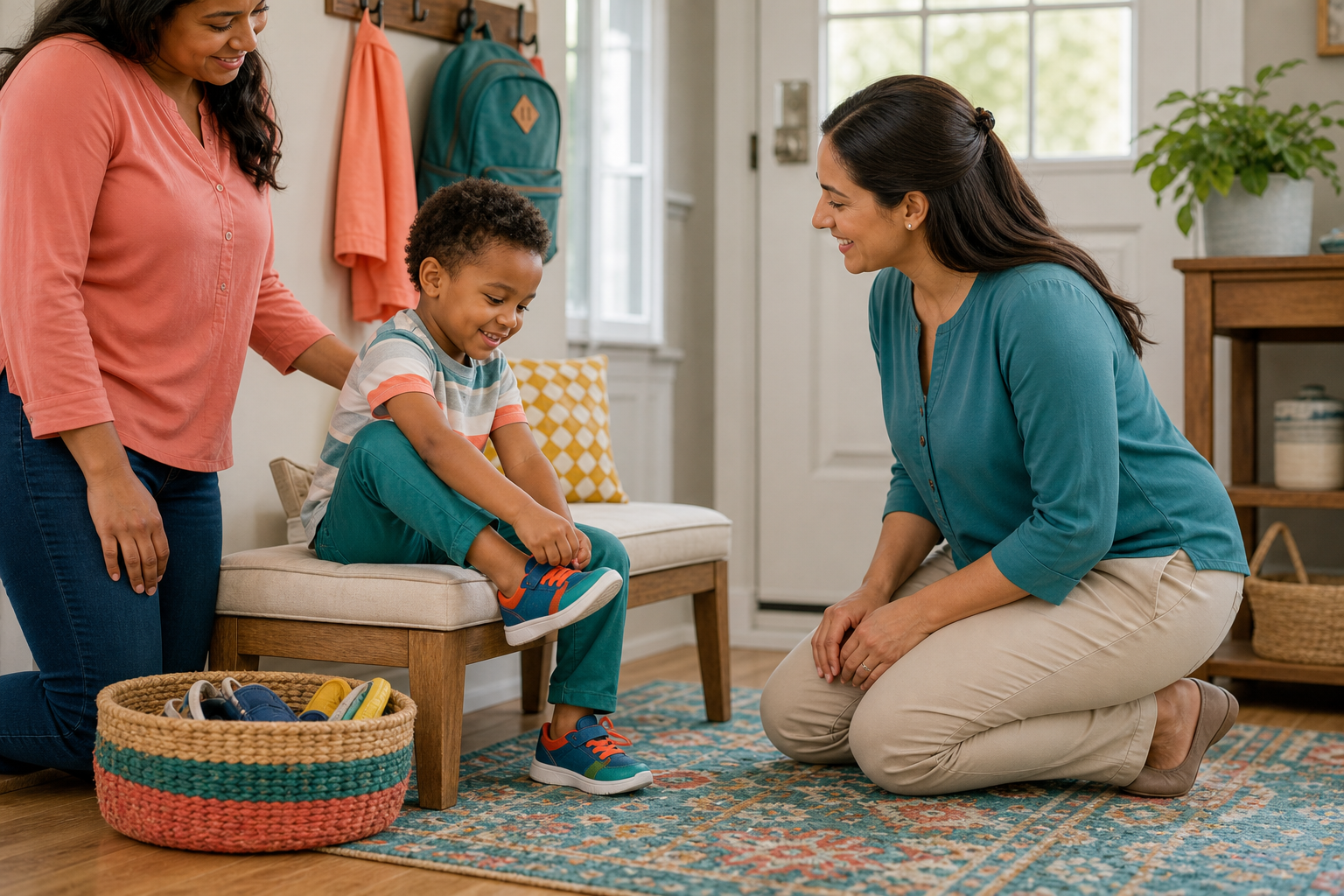
If you’re looking for ABA therapy in Columbia, MD, you may be trying to support your child while keeping meals, school mornings, and after-school routines moving. In-home ABA brings individualized goals into those familiar moments. A BCBA guides assessment and planning, and an RBT may provide direct support under supervision. Learn more about in-home ABA therapy in Columbia, MD as you consider whether home-based care fits your family.
Quick facts
- Setting: In-home ABA for children in Columbia, Maryland, and Howard County.
- Clinical structure: A BCBA leads assessment and planning; an RBT may provide direct support under supervision.
- Possible goals: Communication, transitions, play, self-care, safety, and everyday routines.
- Family role: Caregivers may observe, practice strategies, and share priorities. The level of participation should fit the child’s needs and the family’s daily rhythm.
- Next step: A consultation, assessment, and benefits or authorization review can help clarify fit.
What Does In-Home ABA Look Like in Columbia, MD?
A home session may use ordinary routines as opportunities to practice functional skills. A child might request help during a meal, move between activities, join play, get dressed, follow a safety direction, or prepare for a school or community routine. The team observes what is happening, reviews progress data, and adjusts support around the child’s goals.
The BCBA designs and oversees the plan. An RBT may provide direct support, while caregiver coaching can help useful strategies carry into the rest of the week. The exact activities depend on the child’s assessment, strengths, preferences, and priorities. Home-based care should support the family, not make the home feel like a clinic.
How Are Goals Chosen?
Goals should reflect a child’s strengths, developmental needs, and the routine where support would be most meaningful. Younger children may focus on communication, play, and early daily routines. School-age children may work on transitions, independence, social participation, homework routines, or safety. These are examples, not a checklist for every child. ABA is not a one-size-fits-all manual or a cure, and a BCBA assessment is needed to understand what support may be appropriate.
The Columbia Routine-to-Care Bridge
Use this simple structure to prepare for a consultation. It can help organize observations, but it does not diagnose a child or replace a BCBA assessment.
- Name the home moment: Choose one pressure point, such as a morning transition, mealtime communication, self-care, after-school regulation, or safety concern.
- Read the context: Note when it appears, who is present, how the child communicates or shows preferences, and which environmental conditions may matter.
- Match the setting: Consider in-home, school-connected, center, community, or telehealth support alongside the child’s goals, schedule, privacy, travel needs, and authorization requirements.
- Align the care circle: Clarify BCBA leadership, RBT implementation, caregiver coaching, school communication, releases, and one or two shared goals. This is the heart of Able Minds’ Parent-Professional Partnership.
- Review the bridge: Ask how progress will be explained, when goals may be refined, and how skills can carry across home, school, and community settings.
How Families Get Started With In-Home ABA in Howard County
Families typically begin with a consultation, records or referral review, and BCBA assessment. The assessment informs an individualized Plan of Care. The provider can review benefits, determine whether prior authorization is required, and discuss scheduling. Eligibility, hours, costs, staffing, and timing vary by child, payer, network, and current availability.
The Maryland Department of Health’s ABA guidance says Maryland Medicaid covers medically necessary ABA for eligible members under 21. Diagnosis, medical necessity, documentation, plan participation, and prior authorization still require family-specific verification. Commercial coverage varies by plan, so families may also want to review Maryland ABA insurance coverage.
How Should Families Compare Home and Center-Based Care?
Home sessions can make daily routines and caregiver coaching easier to observe. Center care may offer structured spaces, peer practice, and specialized materials. Neither setting is universally better. The right fit depends on the child’s goals, family context, assessment, authorization, and school or community needs.
If school coordination matters, Howard County Public School System early-childhood resources can help families understand educational pathways. School services and provider-delivered ABA have separate eligibility and authorization processes. Families can then review the Columbia service page for provider-specific intake and benefits-verification details.
Columbia In-Home ABA Intake Snapshot
Bring these notes to a consultation or assessment. They can turn a broad concern into a focused conversation without trying to determine whether ABA is clinically appropriate.
- Child priority and routine: Name the routine where support is most needed and the moment that tends to stall. Note communication, play, independence, transition, or safety priorities.
- Context, strengths, and preferences: Record communication methods, interests, preferences, signs of comfort or distress, and when the challenge appears.
- Care circle and records: Gather diagnoses, evaluations, therapies, school supports, IEP or Child Find information when relevant, releases, caregiver availability, and home logistics.
- Coverage and scheduling: Bring insurance or Medicaid details and questions about medical necessity, authorization, service-area fit, preferred setting, privacy, and scheduling.
- Partnership and progress questions: Ask who leads planning, how BCBA supervision works, who implements sessions, how coaching is handled, how progress is reviewed, and how school communication works.
FAQ: In-Home ABA Therapy in Columbia, MD
What does an ABA therapist do during a home session?
The team works on functional goals within everyday routines, observes patterns, reviews data, and adjusts support. The BCBA oversees the plan, and an RBT may provide direct implementation.
How involved are caregivers in in-home ABA?
Caregivers may observe, share priorities, practice strategies, and discuss progress. Participation is individualized. Parents are partners in care, not replacements for the clinical team.
Is in-home ABA better than center-based ABA?
Home care can support familiar routines and carryover, while center care may offer structure and peer practice. Fit depends on goals, context, assessment, authorization, and family preferences.
Does Maryland Medicaid cover in-home ABA therapy?
Maryland Medicaid covers medically necessary ABA for eligible members under 21, according to the Maryland Department of Health. Eligibility, documentation, plan participation, and prior authorization must be verified. Commercial coverage varies by plan.
The right setting is an individual decision. Families in Columbia and Howard County can review in-home ABA therapy in Columbia, MD for Able Minds’ provider-specific service, intake, and benefits-verification details.
