


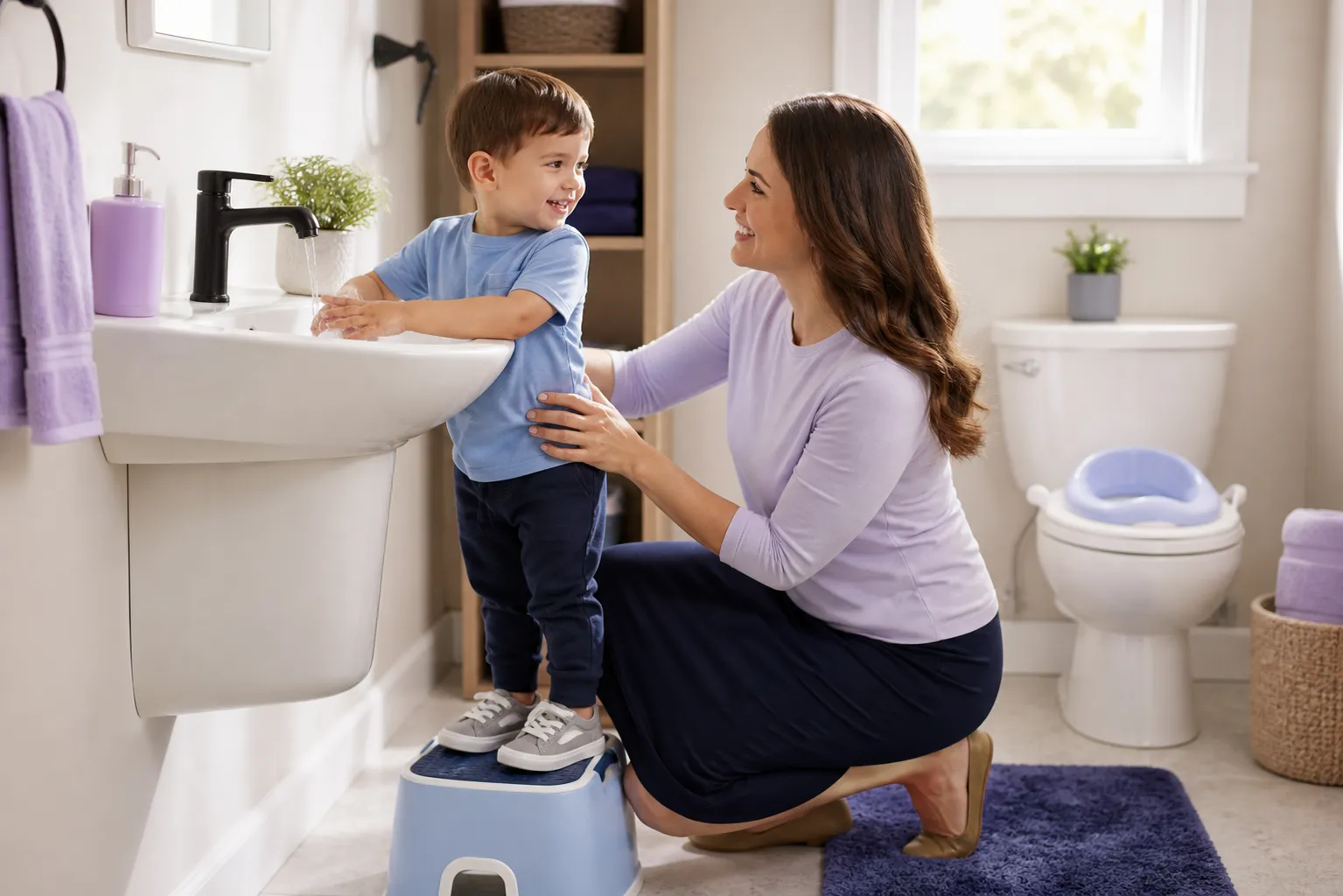
ABA toilet training gives families a more structured way to teach bathroom skills at home. Instead of relying on trial and error, it uses observation, simple routines, clear prompts, reinforcement, and light tracking to help a child learn step by step. Progress is rarely perfectly linear, but a steady plan can make the process feel less stressful and more manageable.
If toilet training has started to feel overwhelming, you are not doing anything wrong. Many parents reach a point where they need a clearer plan, especially when progress seems inconsistent or the process is affecting the whole family’s daily rhythm. This guide is here to help you understand how ABA can support toilet training at home, what to adjust first when things feel stuck, and when it may be helpful to bring in support from a BCBA, RBT, pediatrician, or occupational therapist.
Quick Answer: What ABA Toilet Training Helps Parents Do
ABA toilet training helps parents turn toileting into a routine that is easier to teach, repeat, and troubleshoot. It focuses on noticing patterns, setting up the environment, using consistent cues, reinforcing success, and making small changes based on what your child is actually showing you.
Quick Summary
- ABA toilet training teaches bathroom skills one step at a time.
- It can help autistic children and other children who need more structure, repetition, or support with daily living skills.
- Before starting, most families need a simple schedule, easy clothing, a calm bathroom setup, and one clear reinforcement plan.
- Progress may be gradual, and setbacks do not always mean the plan is not working.
For toddlers, that often means short transitions, simple language, and routines that can be repeated without turning the day upside down. The goal is not perfection. It is building a routine your child can understand and your family can realistically stick with. If you want a broader overview first, you can read more about what ABA therapy looks like in practice.
A Quick Readiness Check Before You Start
Before you begin, look for a few signs that your child may be ready for more structured practice. Training often goes more smoothly when a child can stay dry for longer stretches, tolerate sitting for a short period, show some awareness of body cues or bathroom routines, wear clothing that can be moved quickly, and experience at least some consistency across caregivers.
For toddlers, the small details matter. A child who is overtired after naps, confused by frequent pull-up changes, or getting different bathroom expectations at home and daycare may have a harder time even if they are close to ready. If broader routines already feel difficult, it may help to look at how ABA can support sleep, eating, and other daily routines.
If your child is dealing with constipation, pain, stool withholding, or strong distress around toileting, check in with a pediatrician first. Those concerns should not be treated as simple behavior issues.
The MATCH Toilet Training Method
Many families do better when they follow one clear approach instead of trying a different tip every few days. The MATCH method keeps toilet training simple enough to follow and clear enough to adjust when something is not working.
Measure the Pattern
Start by noticing what is already happening. Look at how long your child stays dry, when bowel movements usually happen, where accidents are most common, and what body signals show up before they need to go. For toddlers, those signals may be subtle. You might notice a pause in play, hiding, squirming, or resistance around transitions.
Even two or three days of simple notes can help. Write down bathroom trip times, accidents, successful voids, stool timing, and whether your child tolerated sitting. That gives you something real to work from instead of guessing.
Arrange the Environment
Make the bathroom routine easier to learn. Choose clothing that comes off quickly, add a step stool or toilet seat insert if your child needs more stability, and keep your cue language short and consistent. Many young children respond better when they hear the same simple phrase each time.
Sensory comfort matters too. If flushing sounds, bright lighting, or the feel of the toilet seat are adding stress, it is worth adjusting those things early. A child who feels uncomfortable in the bathroom may not be resisting the skill itself. They may be reacting to the environment.
Teach the Chain
Teach toileting as one repeatable sequence:
- go to the bathroom on cue
- pull clothing down
- sit briefly
- try to void
- pull clothing up
- wash hands
Use prompts only as much as your child needs, then start fading them. You might begin with more hands-on guidance, move to a gesture, then use a short verbal reminder, and eventually pause to see whether your child can do the step more independently. Reinforcement should happen right after the step or success you are trying to build.
Keep the tone calm and matter-of-fact. Accidents are information. They are not failure.
Chart the Response
You do not need a complicated data sheet to notice progress. A short note on your phone or a simple paper tracker is often enough if it shows whether success is increasing, accidents are happening at the same times, sitting tolerance is improving, or prompts are starting to fade.
This is what helps you make useful adjustments. If accidents keep happening before the next planned trip, the schedule may be too wide. If your child will sit but never voids, timing or reinforcement may need to change.
Handoff the Routine
A lot of families see progress at home, then feel discouraged when it falls apart with another caregiver or at daycare. That does not always mean the plan is failing. Often, it means the routine is not carrying across settings clearly enough.
Try to keep the same bathroom words, timing expectations, and reinforcement approach wherever possible. A short written handoff note can help, especially for toddlers moving between home and daycare. If that transition has been hard in other areas too, this article on bringing routines across home and classroom may be helpful.
Reinforcement, Prompt Fading, and Parent-Friendly Progress Tracking
Reinforcement works best when it is immediate and meaningful to your child. For some children, enthusiastic praise is enough. Others respond better to something more concrete, like a sticker, a favorite song, or a short preferred activity right after a successful bathroom step. For toddlers, brief and predictable rewards are usually easier to connect to the moment.
Prompt timing matters too. A prompt should help your child complete the step, not teach them to wait for an adult every time. If you are still giving the same amount of help after several days, look for small ways to reduce it.
When progress stalls, change one thing first. Tighten the schedule, strengthen the reinforcement, shorten the sit, or simplify the language. Try not to change everything at once. If consistency has been hard to hold together, it may help to revisit why consistency matters in ABA and explore parent-friendly ABA resources for daily progress.
Decision Tool: What Should We Change Next in ABA Toilet Training?
If the routine feels stuck, use this quick check to decide what to adjust next.
- If accidents stay frequent: look at dry-window patterns first, then tighten the bathroom schedule.
- If your child refuses to sit: check seat stability, bathroom sensory stress, and whether the sitting expectation is too long.
- If your child will sit but will not void: look at timing and whether the reward is motivating enough to matter.
- If you notice stool withholding or constipation signs: pause behavior troubleshooting and talk with your pediatrician.
- If flushing sounds, echoes, or lighting trigger distress: change the sensory setup before assuming your child is refusing the routine.
- If success only happens with one caregiver: simplify the cue language and make sure each caregiver is using the same basic plan.
- If success happens at home but not at daycare or school: create a short handoff plan with the same timing, prompts, and reinforcement.
- If nighttime is the only gap: remember that nighttime dryness often develops on a different timeline than daytime skills.
The goal is not to pile on more pressure. It is to find the next most helpful adjustment.
When Home Toilet Training May Need More Structured ABA Support
Sometimes a home plan makes sense, but progress still stalls. If consistency is there and the routine still is not moving, if sensory distress is getting in the way, if communication barriers are making the steps hard to teach, or if caregiver burnout is building, more structured support may help.
A BCBA can look at the pattern, refine the prompting plan, adjust reinforcement, and coach caregivers so the routine fits real family life rather than feeling like one more impossible task. For families in Maryland, in-home ABA therapy in Maryland can offer hands-on support in the setting where these skills actually happen every day. Able Minds also helps families navigate insurance paperwork, prior authorizations, and coordination across caregivers when those pieces are part of the challenge.
FAQ
What is ABA toilet training?
ABA toilet training is a structured way to teach bathroom skills using observation, clear steps, reinforcement, and consistency. Instead of relying on guesswork, it helps parents break the routine into smaller parts and adjust the plan based on what their child is showing them.
How does ABA help with potty training?
ABA helps by making toilet training easier to repeat and easier to troubleshoot. Parents can use planned bathroom trips, simple prompts, immediate rewards, and light tracking to figure out whether the main issue is timing, motivation, sensory discomfort, or inconsistency across caregivers.
What are the steps in ABA potty training?
A practical ABA potty-training plan follows the MATCH process: measure the pattern, arrange the environment, teach the chain, chart the response, and hand off the routine across caregivers. That gives families a clear sequence instead of a long list of disconnected advice.
How long does ABA toilet training take?
There is no single timeline that fits every child. Progress depends on readiness, consistency, communication needs, sensory factors, medical issues such as constipation, and how well the routine carries across settings. Steady, supported repetition usually matters more than trying to rush the process.
Can ABA toilet training be done at home?
Yes. Many families start ABA toilet training at home because a familiar setting can make the routine easier to practice. If you need more structure or coaching, in-home ABA support in Maryland can help families build a plan that fits everyday life.
What if my child is still having accidents after we start?
Start by checking one variable first. Look at the bathroom schedule, the value of the reinforcement, sensory stress in the bathroom, and whether prompts are helping or creating dependence. Then make one focused adjustment before changing the whole plan.
