


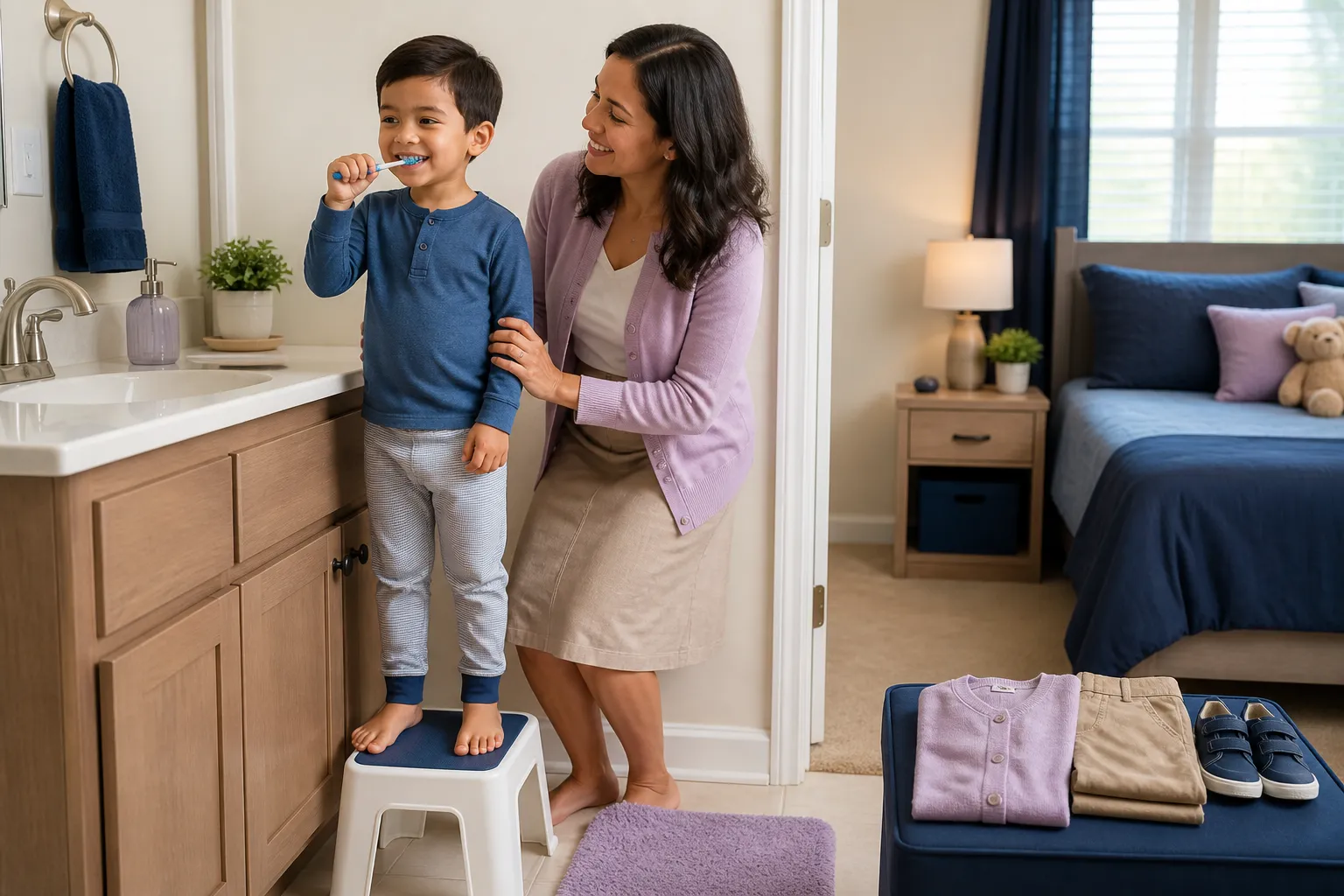
ABA therapy focuses on daily living skills which helps children learn routines like getting dressed, brushing teeth, washing hands, and managing other self-care tasks through clear, teachable steps. If those moments feel stressful at home, ABA can help identify what is getting in the way and build more independence over time.
For many parents, dressing and hygiene challenges shape the whole day. School mornings can feel chaotic, bedtime can become tense, and it is not always clear whether a child needs more practice, less help, or a different approach. This guide explains how Applied Behavior Analysis (ABA) supports dressing and hygiene, why progress can stall, and when extra support may help. For Maryland families, Able Minds ABA approaches this work as a partnership so skills carry over in the places children actually live and learn.
Quick Answer + Key Facts Block
In ABA therapy, daily living skills are everyday self-care routines, often called activities of daily living or ADLs, that help children function more independently. Dressing and hygiene matter because they affect health, privacy, confidence, and how smoothly the day runs.
Quick Summary
- ABA teaches self-care skills step by step.
- Progress improves when the real barrier is identified first.
- Home routines usually improve faster when practice happens in the real setting.
- BCBA guidance can help when routines stay stressful or inconsistent.
Why Dressing and Hygiene Routines Get Stuck
When a child struggles with dressing or hygiene, the issue is not always simple refusal. Some children dislike clothing textures, toothpaste flavors, running water, or hair brushing. Others know the goal but have trouble with sequencing, transitions, communication demands, or staying regulated long enough to finish.
Privacy and body-awareness concerns can matter too, especially as children get older. Younger children often need help with tolerance, participation, and consistency. Older children may feel more social pressure around bathing, grooming, or school-morning readiness.
Parents are often left wondering whether to push, pause, prompt, or ask for help. It also helps to remember that pain, oral sensitivity, skin irritation, or significant motor and sensory concerns may need medical, dental, or occupational therapy input alongside ABA. Not every self-care challenge is purely behavioral. If routines feel tense from start to finish, Why Daily Routines Are a Battle for Kids With Autism and How ABA Helps offers more context.
The ROUTE to Independence Framework
A practical way to approach progress is the ROUTE to Independence framework.
R – Routine first
Choose the single dressing or hygiene routine causing the most friction right now. That might be getting dressed for school, brushing teeth before bed, or washing hands after the bathroom.
O – Obstacles before outcomes
Before aiming for “more independence,” identify what is blocking the skill. Is it sensory discomfort, motor difficulty, confusion about the steps, transition resistance, language demands, privacy discomfort, or low motivation?
U – Unpack the task
ABA uses task analysis to turn a broad goal into smaller, observable steps. “Get dressed” is vague. “Pick up the shirt, find the opening, put one arm in, then the other” is teachable.
T – Transfer with less help
True independence means a skill works with less support, with different adults, and in the real settings where the routine happens. Prompt fading and generalization are essential. For more on carryover across environments, see Bridging the Gap Between Home and Classroom Through ABA Therapy.
E – Evaluate the effort-to-progress ratio
Look at whether the routine is becoming calmer and more doable. If stress keeps rising, progress only happens with one adult, or the child shuts down each time, it may be time for a more structured plan.
Teaching Dressing Skills Through ABA Therapy
Dressing goals should be practical and tied to the child’s real day. One child may need to tolerate socks or certain fabrics. Another may need to learn the order of underwear, pants, shirt, socks, and shoes. A school-age child may need help becoming more independent during the morning routine.
ABA often teaches dressing with task analysis, chaining, prompting, reinforcement, and gradual fading. In forward chaining, the child learns the first step first and gets help with the rest. In backward chaining, the adult completes most of the routine and the child finishes the final step.
A shirt routine, for example, might be broken into six steps: pick up the shirt, find the front, put one arm in, put the other arm in, pull it over the head, and pull it down. That makes it easier to see where the child is getting stuck.
For younger children, early goals may focus on participation, tolerance, and simple sequencing. For older children, goals may focus more on independence, privacy, and school-morning carryover. Progress should always protect dignity. If fasteners remain especially hard because of fine-motor demands, adaptive clothing or occupational therapy collaboration may help.
Teaching Hygiene Routines Without Turning Them Into a Battle
Hygiene routines often involve several challenges at once. A child may dislike the taste of toothpaste, the sound of water, the feeling of wet hair, or the transition into the bathroom itself. That is why it helps to identify which part of the routine is actually hardest.
Handwashing may involve learning the sequence and staying with the task long enough to finish. Toothbrushing may require tolerance-building, a simpler setup, and short practice before expecting full completion. Bathing and grooming may involve privacy language, body autonomy, and sensitivity to temperature, sounds, or hair care sensations.
ABA can support these routines by building tolerance gradually, using clear prompts, practicing at calmer times, and reinforcing progress without rushing the child. If toothbrushing is the main concern, the first goal may be tolerating the toothbrush, then brushing a few teeth, then completing more of the sequence with less support.
Younger children often need more playful rehearsal and shorter practice. Older children may need more direct attention to privacy, social awareness, and independent completion. If pain, bleeding gums, persistent oral refusal, or other health concerns are involved, medical or dental input should come first.
How to Build Independence Without Over-Prompting
One of the most common problems in self-care routines is prompt dependence. That happens when a child can complete a skill, but only after the same reminder, gesture, or hands-on help every time.
Building independence means fading support gradually. That may look like moving from physical help to a gesture, from a gesture to a visual cue, or from a full verbal reminder to a shorter one. It also helps when caregivers use similar language and practice at the time and place the routine really happens.
Partnership matters here. Parents, RBTs, and BCBAs can work together so a child is not just successful in one therapy moment, but more independent in the family’s real daily rhythm.
When Home Practice Is Enough and When Extra Support May Help
Home practice may be enough when the child is making gradual progress, the main barrier is clear, and caregivers can stay consistent without major stress.
More support may help when routines trigger frequent power struggles or shutdowns, when progress only happens with one adult, when hygiene is affecting health or school readiness, or when the barrier seems sensory, communication-based, or hard to untangle. Family burnout matters too.
A BCBA-led assessment can help clarify whether the issue is a skill deficit, a sensory barrier, an avoidance pattern, or inconsistent carryover across settings. For Maryland families, in-home support can be especially useful because dressing and hygiene routines are best understood where they actually happen. Able Minds ABA approaches this work through in-home and school-based collaboration, with parent coaching built into the process.
If your family needs support that fits real routines at home, learn more about In-Home ABA Therapy in Maryland.
Daily Routine Independence Planner
The Daily Routine Independence Planner can help parents organize one routine at a time.
- Routine to Teach: What exact dressing or hygiene routine are we targeting?
- Why This Routine Matters Now: Is it affecting health, school mornings, privacy, or family stress?
- What’s Blocking It: Does the challenge look sensory, motor-based, communication-based, sequencing-related, or avoidance-based?
- Current Level of Help Needed: What does the child do independently, and where do they still need help?
- Step Breakdown: What are the smallest observable parts of the routine?
- Best Reinforcement Option: What helps the child stay engaged?
- Who Practices It and When: Which caregiver helps, and what time of day makes the most sense?
- How We’ll Fade Help: What is the next lighter level of support?
- How We’ll Generalize It Across Home, School, or Community: Where else does the skill need to work?
- When to Ask for Extra Help: What signs tell us this routine needs a more structured plan?
This tool can help families tell the difference between a skill that is not learned yet and a skill that is known but still resisted.
FAQ
What are daily living skills in ABA therapy?
Daily living skills in ABA therapy are everyday self-care and independence routines that help a child function more independently. They often include dressing, handwashing, toothbrushing, bathing, grooming, feeding, and related routines.
How does ABA therapy teach life skills step by step?
ABA breaks a routine into smaller parts, teaches those steps in a clear order, uses prompting to support success, reinforces progress, and then practices the skill across settings.
How can ABA help with dressing skills?
ABA can help by identifying the real barrier, breaking dressing into manageable steps, and fading help gradually. That matters because dressing problems may involve sensory discomfort, motor demands, sequencing, or rushed routines.
How can ABA help with hygiene routines?
ABA can support handwashing, toothbrushing, bathing, and grooming by building tolerance, simplifying the sequence, reducing transition stress, and increasing independence gradually. If pain or health concerns are involved, other professionals may need to be part of the plan.
At what age should daily living skills training start?
Daily living skills can start early as long as expectations match the child’s developmental level. For younger children, that may mean participation and tolerance. For older children, it may mean more privacy, consistency, and independent completion.
When should parents consider in-home ABA support for daily routines?
Parents may want to consider in-home ABA support when routines stay stressful, progress feels stalled, or success depends too heavily on one adult. Practicing in the real home environment often makes it easier to spot barriers and build routines that last. If you are exploring next steps, In-Home ABA Therapy in Maryland is the best place to learn more.
