


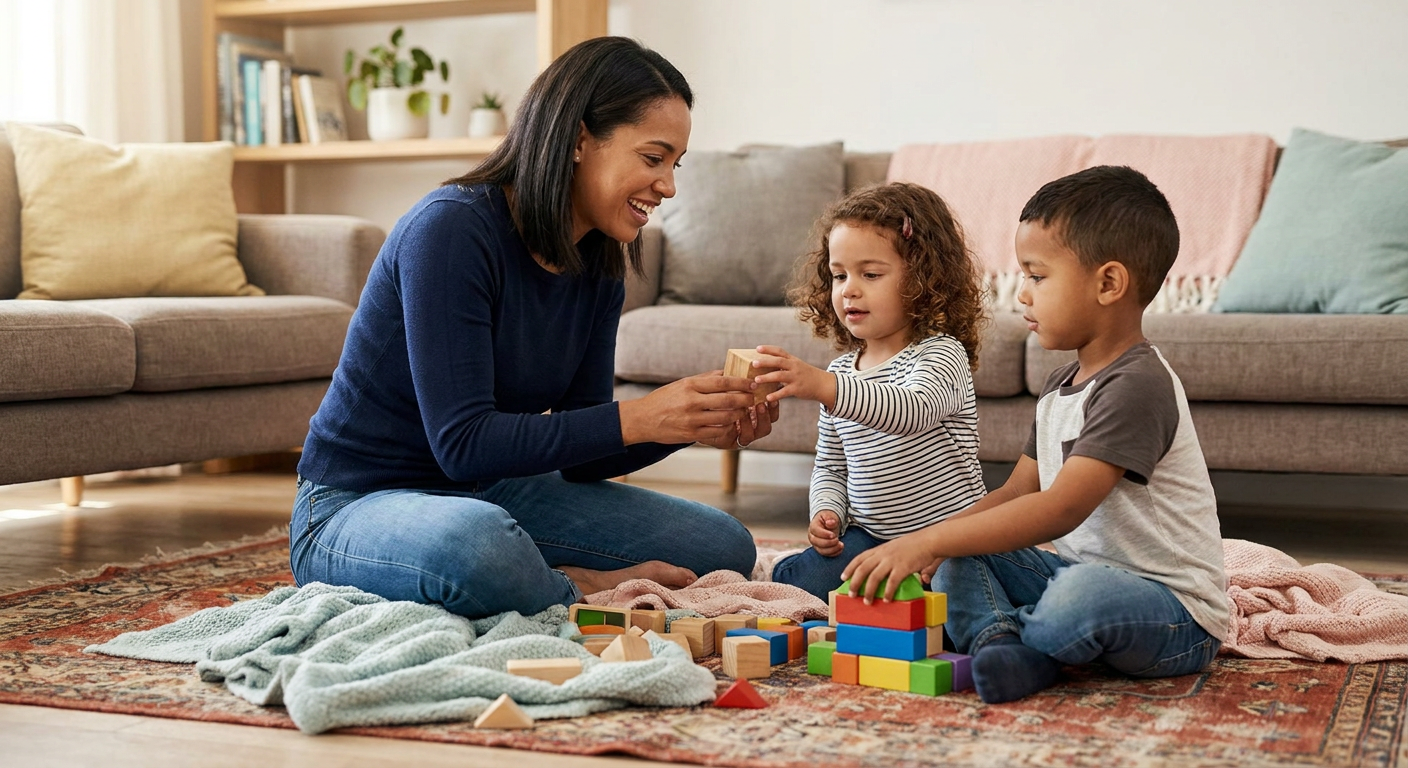
Parents often feel stretched between supporting an autistic child well and making sure a sibling does not feel invisible, burdened, or pushed aside. ABA support for siblings of autistic children is not about turning brothers or sisters into helpers for therapy. It is about using steady routines, clear explanations, healthy boundaries, and thoughtful family support so each child has what they need at home. The goal is not perfect balance every day. The goal is to notice what a sibling is showing, respond in a practical way, and ask for more help when the family needs it.
What Siblings May Be Showing at Home
Siblings of autistic children can show stress in many different ways. Some become more protective. Some act irritated or pull away. Some start asking repeated questions about fairness, rules, or why one child gets more attention. Others try very hard to be flexible and “easy,” even when they are overwhelmed themselves.
In many homes, sibling stress shows up in behavior before it shows up in words. A younger child may become clingier at bedtime, argue more during transitions, or copy behaviors they do not fully understand. An older child may spend more time alone, avoid family routines, become embarrassed in public situations, or quietly keep score of what feels unequal.
That does not mean every hard moment is a warning sign. Occasional frustration, jealousy, or confusion is a normal part of family life. The concern is repeated patterns that keep showing up without relief. If a sibling regularly looks tense around therapy times, resents schedule changes, or seems to believe their own needs always have to wait, that is a sign to make the support plan more intentional.
The most helpful starting point is to look at what is observable. What happened right before the conflict? What does the sibling seem to want or avoid? What family situation keeps leading to the same reaction? That kind of calm observation gives parents better guidance than labeling the sibling as selfish, dramatic, or unusually mature.
What ABA-Informed Support at Home Actually Means
ABA-informed support at home means using practical strategies that make family life more predictable and easier to navigate. That can include clear expectations, visual reminders, consistent routines, simple reinforcement, and follow-through that helps all children understand what happens next. For siblings, it also means explaining what therapy is for, why certain routines matter, and how they can be part of family life without being responsible for treatment.
Just as important, ABA-informed support does not mean asking a sibling to act like a therapist, manage behavior plans, prompt compliance, or absorb emotional pressure that belongs to adults. Siblings can be included, but they should not become behavior managers or unpaid caregivers.
At home, this often looks simple. A parent may give both children a visual heads-up before a transition. A sibling may join a short turn-taking game after therapy, then move on to their own activity. After a difficult moment, a parent may explain what happened in plain language and reconnect with both children instead of expecting one child to “understand” without support.
This is also where parent-professional partnership matters. Parents do not have to improvise alone. If you want a deeper look at how therapy skills carry into everyday life, see “But They Talk at Therapy”: Bridging the Gap with Skill Generalization. For a practical refresher on reinforcement that works in family routines, read How to Build a “Yes” Environment: Positive Reinforcement at Home.
The ROOM at Home Framework
R – Read the sibling signal
Start by identifying the main signal. Is the sibling confused? Jealous? Protective? Withdrawn? Embarrassed? Trying too hard to be the easy child? A younger child may show this through whining, regressions, or sudden meltdowns. An older child may mask it with silence, sarcasm, or resistance to shared routines. The goal is not to treat every reaction as a crisis. It is to figure out what the reaction is communicating.
O – Offer the right explanation
Once you understand the likely signal, give only the explanation the sibling needs right now. Keep it concrete and age-appropriate. You might say, “Your brother gets extra help because some things are harder for him right now. That does not make you less important,” or “Therapy is practice time, not a reward.” Avoid overexplaining clinical details or using cure language. A good explanation reduces confusion without placing adult emotional weight on the child.
O – Open safe participation with boundaries
Some siblings want to be included. Some do not. Both responses are valid. Safe participation can mean joining a game, helping choose a family routine chart, cheering on a shared success, or practicing turn-taking during play. It should not mean running programs, correcting behavior, or feeling responsible for outcomes. If a sibling wants distance, respect that too. Participation should stay optional, low-pressure, and appropriate for the child’s age.
M – Make space that is just theirs
Siblings need parts of family life that are not organized around therapy. That may be ten minutes of one-on-one play, a bedtime check-in, a weekend errand together, or a small ritual that belongs only to that child. Younger children usually respond well to simple, predictable rituals. Older children may need privacy, choice, and a chance to talk without the conversation circling back to their sibling. Feeling seen should not depend on whether the autistic child is having an easy day.
Monitor – Recheck the family rhythm
Support plans should be revisited. If the same conflict keeps returning, if resentment is growing, or if a sibling starts taking on too much emotional responsibility, the current approach may need adjustment. Monitoring does not mean watching everyone constantly. It means noticing whether the family rhythm is actually getting easier and reaching out to the BCBA, parent-coaching team, or another support professional when it is not.
How to Explain Autism and Therapy to a Sibling in an Age-Appropriate Way
A good explanation should reduce confusion, name differences without shame, and help a sibling understand what to expect at home. The core message is that fairness is not always the same as sameness. Children in the same family can need different kinds of support, rules, reminders, or help.
For younger children, keep the message short and concrete:
- “Your sister’s brain learns some things differently.”
- “Therapy helps her practice talking, playing, and other daily skills.”
- “You are both important, even when one child needs extra help.”
For older children, you can add more nuance:
- Explain that autism can affect communication, flexibility, sensory comfort, and behavior in different ways.
- Acknowledge that family routines may shift at times and that it is okay to have feelings about that.
- Make space for questions about privacy, embarrassment, or why the rules do not always look the same.
When a sibling asks, “Why do they get so much help?” try: “Because this is the kind of support that helps them learn right now. If you need help with something too, we will help you.” If they ask, “Why do I have to change what I do?” try: “Sometimes the family makes small changes to keep everyone safe and calm, but that does not mean your needs disappear.”
Keep therapy language simple. Instead of clinical terms, describe it as practice, support, or learning time. For a related guide on explaining autism consistently across the family, read Explaining Autism to Grandparents and Extended Family.
Safe Ways Siblings Can Participate Without Pressure
Sibling participation works best when it feels natural and optional. A sibling might join a short shared play activity, help choose between two family routines, celebrate a small success, or practice turn-taking in a way that benefits everyone. These moments can build connection without shifting responsibility away from adults.
Boundaries matter just as much as inclusion. Parents should not ask siblings to deliver prompts, monitor behavior plans, supervise challenging moments, or act as the reason a skill generalizes. If a strategy only works when the sibling does extra emotional or behavioral labor, it is not a healthy sibling-support strategy.
Here are a few practical examples:
- Transitions: Let a sibling pick the music for cleanup or the order of two shared steps.
- Shared activities: Use short games with clear turns so no child has to carry the interaction.
- Calm-down moments: Teach the sibling where they can go for space rather than asking them to stay and “help.”
- Bedtime: Use a predictable sequence that protects both connection and decompression.
If a sibling feels left out and wants more involvement, offer a small, structured role such as choosing a game or joining the first five minutes of an activity. If they want distance, give clear permission to step back without guilt. For more family-friendly routine ideas, see How to Build a “Yes” Environment: Positive Reinforcement at Home and How to Build a Successful Bedtime Routine (The ABA Way).
Sibling Support at Home Planner
When sibling tension keeps repeating, use this planner to decide what support fits right now:
- What is the sibling showing? Look for withdrawal, frustration, protectiveness, clinginess, acting out, people-pleasing, or fairness questions.
- What might they believe? They may think the autistic child is more important, that therapy is a reward, or that they have to stay quiet to avoid adding stress.
- What support fits this week? Choose one main response: better explanation, more reassurance, brief safe inclusion, protected one-on-one time, or a routine change.
- Is there a safe way to include them? If yes, keep it brief and optional. If no, protect their space instead.
- What boundary needs protection? Name what the sibling is not responsible for, including behavior change, supervision, or emotional caretaking.
- What reconnection step will happen? Plan one concrete moment of attention that belongs only to them.
- What will you say? Use one simple script and repeat it consistently during the week.
- Do you need the ABA team? Reach out if conflict keeps repeating, the sibling is carrying too much pressure, or the routines are no longer working.
- Could this need broader support? If the sibling shows ongoing distress, outside emotional support may be appropriate.
This kind of planner is most helpful after stressful weeks, schedule changes, or repeated sibling conflict. It turns vague worry into a clearer next step.
When to Bring in Extra Help
Some sibling stress improves with clearer routines, better explanations, and more protected attention. Sometimes it does not. Extra help may be needed when a sibling shows persistent withdrawal, escalating resentment, major behavior changes, ongoing guilt, role confusion, or repeated conflict that does not settle even after the home plan changes.
This is often the right time to involve the BCBA or parent-coaching team. They can help refine routines, tighten boundaries, and reduce pressure points that are affecting everyone in the home. For families working with providers such as Able Minds ABA, that partnership can make support feel more practical and less reactive.
It is also important to recognize the limits of ABA. ABA-informed family support can improve structure, communication, and day-to-day coping, but it does not replace every form of emotional support a sibling may need. Some children benefit from separate counseling, a sibling support group, or family-based guidance outside the therapy framework.
Asking for help is not a sign that the family is failing. It is a way to protect relationships before strain becomes the new normal. If you are evaluating how to work more effectively with your child’s team, Finding the Right BCBA: Questions Every Parent Should Ask offers a helpful starting point.
FAQ
How can I support the sibling of an autistic child at home?
Start with validation, predictable routines, and one-on-one attention. Then decide whether the sibling needs more explanation, safe inclusion, or more space. Support should lower pressure, not increase it.
How do I explain autism to a sibling in an age-appropriate way?
Use simple, concrete language and focus on what the sibling needs to understand right now. Explain that fairness is not always the same as sameness and that different children can need different kinds of support.
Should siblings be involved in ABA therapy?
Sometimes, in small and age-appropriate ways. Joining a shared game or routine can be helpful, but it should stay optional. Siblings should not be responsible for prompting, managing behavior, or carrying therapy goals.
How can siblings participate without feeling responsible for therapy outcomes?
Give them low-pressure roles such as choosing a game, taking turns, or celebrating a success. Be clear that adults and professionals are responsible for therapy, not siblings.
What should I do if a sibling feels jealous, ignored, embarrassed, or resentful?
Name the feeling without judgment, respond to the specific situation, and create a concrete reconnection plan. If those feelings keep resurfacing or start affecting behavior, bring in more support.
When should parents seek professional or group support for siblings?
Seek extra help when a sibling shows persistent distress, repeated withdrawal, strong resentment, role confusion, or family conflict that does not improve with better routines and communication. Early support can protect both the sibling and the family relationship.
