


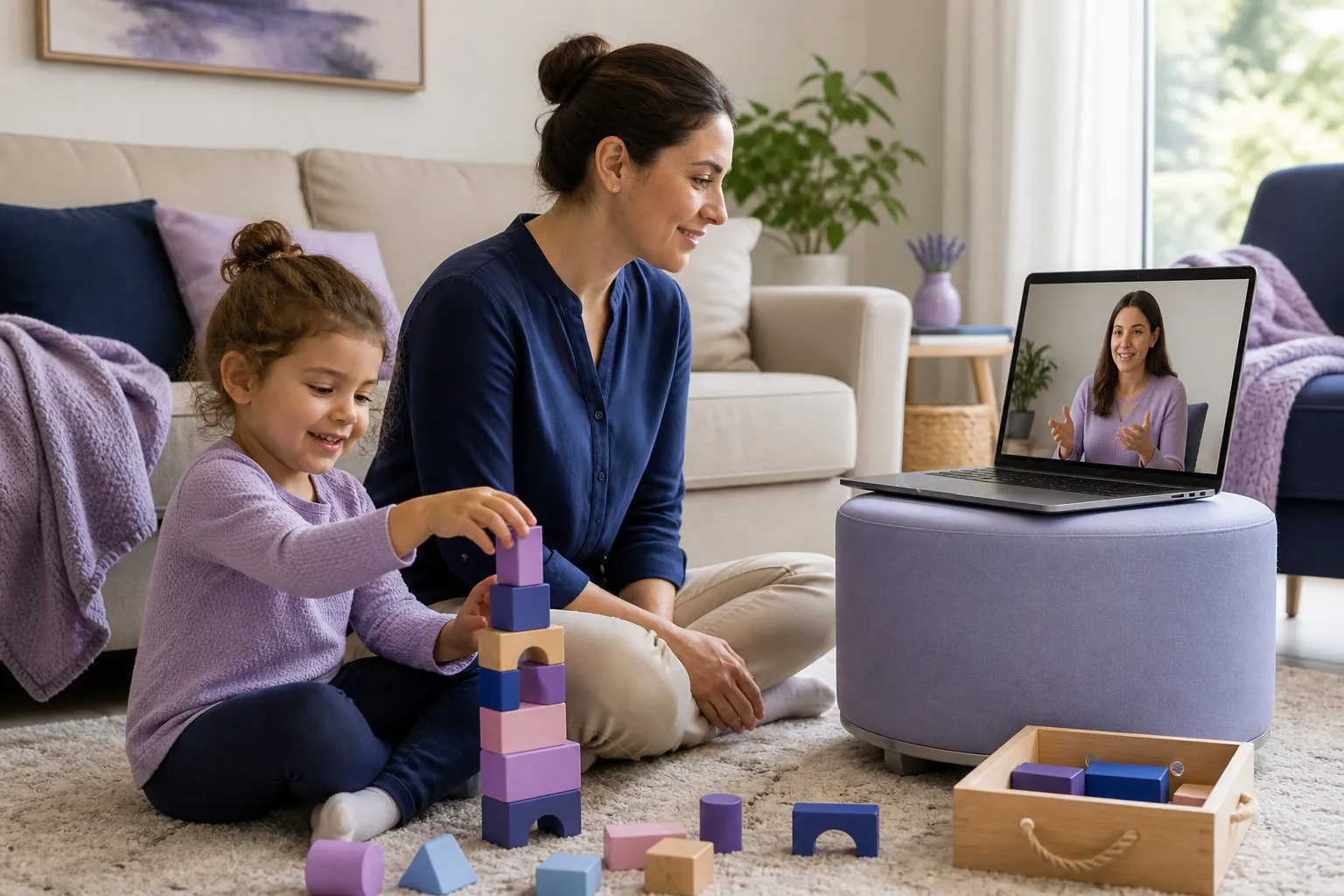
If you’re already juggling in-home ABA sessions, school demands, and the routines that shape everyday life, it’s natural to want support that feels practical, not like one more thing to manage. For many Maryland families, telehealth parent coaching works best when it strengthens the in-home care their child is already receiving. It gives parents direct guidance between visits, helps the care team stay connected, and turns real-life challenges into opportunities for more meaningful progress.
If you’re exploring whether this kind of support makes sense for your family, telehealth ABA therapy in Maryland can be a helpful place to start. The bigger question, though, is how virtual coaching fits into your child’s broader plan, especially when in-home ABA is already part of the picture.
Families often reach a point where in-home sessions are helping, but the hardest moments still happen between visits. Mornings may feel chaotic. Mealtimes may still be stressful. Homework, transitions, or bedtime can keep bringing up the same struggle. Telehealth parent coaching can help close that gap by giving caregivers BCBA-led support around the routines that matter most.
This article walks through how a hybrid model works, when it can be a strong fit, and when more hands-on in-home support may still be the better option.
Quick Summary: What a Hybrid ABA Plan Looks Like
A hybrid ABA plan uses telehealth parent coaching to support caregivers between in-home ABA sessions so strategies carry over into everyday routines.
- Who is involved: usually a BCBA, the caregiver, the child, and the in-home RBT team when applicable.
- What telehealth coaching is best for: routine-based problem-solving, caregiver guidance, carryover between sessions, and quick adjustments when something is not working at home.
- What it is not: a replacement for every in-home need or the right stand-alone option for situations that still need live modeling or higher levels of support.
- Why families consider it: it can add flexibility, improve consistency, and help the care team respond faster to challenges that show up between visits.
How Telehealth Parent Coaching Fits With In-Home ABA Therapy
Telehealth parent coaching and in-home ABA should feel like two parts of the same plan, not two separate systems competing for your time.
During telehealth coaching, the BCBA usually helps caregivers work through the routines that feel hardest, talks through what happened since the last session, and adjusts strategies based on what is actually happening at home. That may include helping a parent respond to refusal at bedtime, reduce power struggles around homework, support communication during transitions, or make a mealtime routine feel more manageable.
During in-home ABA therapy in Maryland, the care team can model strategies directly in the child’s natural environment, practice skills in real time, and spot barriers that are easier to catch in person. This kind of hands-on support often matters when a child needs live prompting, direct teaching, or closer observation.
The strongest plans connect the two. A BCBA may coach a parent virtually on how to handle a recurring after-school problem, then use the next in-home session to model the routine and fine-tune the approach. If consistency across settings is part of the goal, school-based ABA therapy in Maryland can also help connect home and school so progress is not limited to one environment.
Age and stage matter too. Younger children often need more caregiver involvement around play, early communication, toileting, mealtimes, and transitions. School-age children may need support around homework, flexibility, sibling interactions, and after-school regulation. Older children and teens may benefit from coaching tied to independence, self-advocacy, hygiene, and daily living routines.
Telehealth can be a valuable support, but it is not the right answer for every child or every concern. Some goals still call for more direct in-person observation and modeling.
What a Typical Week Looks Like in a Hybrid ABA Plan
A coordinated week often feels more manageable than families expect because each part of the plan has a clear role.
- In-home session: the in-home team works directly with the child on targeted goals in the home environment while the BCBA monitors progress and identifies what needs more support.
- Telehealth coaching session: the BCBA meets with the caregiver to review friction points, talk through what happened between visits, and coach one or two practical responses for the next few days.
- Between-session follow-through: the caregiver uses those strategies during real routines like getting ready for school, handling transitions, or supporting communication during meals or play.
- Feedback loop: the parent shares what improved, what stayed hard, and what changed so the BCBA can adjust the next step instead of repeating generic advice.
For example, a younger child may do well during in-home teaching but still struggle when it is time to stop playing and come to dinner. A telehealth session can help the parent practice the exact wording, visuals, or reinforcement plan to use in that moment. A school-age child may seem settled during sessions but melt down around homework every afternoon. In that case, virtual coaching can help the family build a more realistic after-school rhythm without waiting a full week to problem-solve.
Parents are not expected to become therapists. The goal is partnership and supported follow-through, not full clinical responsibility. If you want more ideas for what carryover can look like in daily life, supporting your child’s progress between ABA sessions and how parents and therapists work together for better ABA results both expand on that idea.
If a child has urgent safety concerns, severe behavior that needs live assessment, or very low tolerance for remote interaction, a plan may need more in-home involvement.
BRIDGE Fit Map
The BRIDGE Fit Map is a simple way to think through whether telehealth coaching should support, extend, or stay secondary to in-home ABA.
B – Biggest friction moments
Start with the two or three routines that feel hardest right now. These are often the moments where families feel like progress disappears as soon as the session ends: mornings, bedtime, mealtimes, homework, transitions, or sibling conflict. If those challenges mostly happen between in-home visits, telehealth coaching may be especially helpful.
R – Roles on the care team
Clear roles matter. The BCBA should guide the plan, coach the caregiver, and adjust strategies based on progress. The caregiver should know what to practice and what not to carry alone. The in-home team should provide direct implementation and live modeling when hands-on support is still needed. That kind of structure supports the parent-professional partnership Able Minds ABA is known for.
I – In-routine carryover capacity
A plan has to work in real life, not just on paper. Some parents can consistently practice one or two strategies between sessions. Others are balancing work, multiple children, or unpredictable schedules. Younger children often need more adult participation, while older children may need support tied to independence and follow-through. Telehealth works best when expectations match the household’s actual bandwidth.
D – Data and feedback loop
Virtual coaching becomes much more useful when it stays specific. Parents do not need perfect notes, but it helps to notice patterns: what triggered the problem, what response you tried, what worked, what did not, and whether anything changed across the week. That kind of feedback helps the BCBA adjust the plan in a way that feels tailored instead of generic.
G – Generalization checkpoints
Progress matters most when it shows up outside the session. Families and clinicians should look at whether a skill is carrying over at home, at school, and in the community. If home and school both need to stay aligned, school-based ABA therapy in Maryland can support that broader coordination.
Hybrid ABA Support Planner
If you’re comparing service options, this side-by-side view can make the decision feel more practical.
| Criteria | Telehealth Parent Coaching | In-Home ABA | Combined Plan |
| Main goal | Coach parents through routines between visits | Deliver direct teaching and live modeling in the home | Connect caregiver guidance with hands-on implementation |
| Best-fit child profile | Child benefits from routine-based support and caregiver carryover | Child needs live prompting, observation, or direct intervention | Child needs both direct support and between-session consistency |
| Caregiver role | Active participant in coaching and follow-through | Supportive, with less pressure to lead each intervention | Guided partner with clear, manageable next steps |
| BCBA involvement | Coaching, problem-solving, and plan adjustment | Program design, supervision, and observation | Ongoing coordination across both formats |
| RBT involvement | Limited or indirect | Direct implementation when part of the plan | Direct implementation plus feedback to the BCBA |
| Tech/setup needs | Reliable internet, a device, and quiet time for coaching | Minimal technology needs | Both home-session logistics and virtual access |
| Ideal routines or skills to target | Mealtimes, transitions, bedtime, homework, and communication carryover | New skill teaching, live modeling, and behavior support in the environment | Generalization across routines and settings |
| Insurance or coverage questions | Ask whether parent coaching is covered and how it is billed | Ask about service hours, supervision, and authorizations | Ask how telehealth and in-home services work together under your plan |
| Limits or red flags | Lower value if caregiver bandwidth is very limited or the child needs more direct support | Can leave gaps between visits if caregiver support is minimal | Requires strong communication and realistic expectations |
| Best next-step question to ask a provider | “What will you coach me to do between sessions?” | “What will you model directly in my home?” | “How will telehealth coaching and in-home ABA stay connected week to week?” |
A tool like this can make provider conversations more useful. Instead of asking whether telehealth is simply good or bad, families can ask how each format fits their child, their schedule, and their daily rhythm.
When a Hybrid Model Is a Strong Fit and When More In-Home Support Is Needed
When a hybrid model is a strong fit
A combined approach can make sense when parents want guided support between sessions, the child benefits from routine-based follow-through, and the family needs flexibility without losing clinical direction. It can also be a strong fit when the care team is trying to improve consistency across home and school, or when small adjustments between visits could prevent the same problem from repeating all week.
When more in-home support is needed
More direct in-home care may be the better fit when live modeling is still essential, behavior intensity or safety concerns are too high for coaching alone, or caregiver bandwidth is too limited for meaningful carryover right now. Some children also do not engage well enough for telehealth to add value, at least at this stage.
In those situations, in-home ABA therapy in Maryland may need to stay the primary service, with telehealth used only as a secondary support if it genuinely reduces stress instead of adding to it.
What Maryland Families Should Ask Before Choosing This Kind of Support
When Maryland families compare providers, it helps to ask specific questions instead of stopping at whether telehealth is available.
- Is telehealth parent coaching led by a BCBA, and how often will that clinician be involved?
- How will telehealth recommendations connect back to in-home ABA sessions and RBT implementation?
- If school carryover matters, how will the provider support coordination across settings?
- What help is available for private insurance, Medicaid, prior authorizations, and claims?
- How will progress updates be shared with parents, and how quickly can the plan change when a routine is not working?
Families should also ask how a provider defines partnership. That answer says a lot about what day-to-day support will actually feel like. At Able Minds ABA, the goal is a coordinated plan that helps parents feel informed, supported, and more confident using strategies in daily life.
FAQ
How does telehealth parent coaching complement in-home ABA therapy?
Telehealth parent coaching gives caregivers direct guidance between in-home ABA sessions, while in-home care provides live implementation and modeling in the child’s natural environment. Both should support the same goals, not two separate plans.
When is telehealth parent coaching a good fit, and when is it not enough on its own?
It is often a good fit when families need help with carryover, routine-based problem-solving, and more flexibility between visits. It may not be enough on its own when a child needs more direct in-person teaching, behavior support, or live observation for safety and clinical accuracy.
Can a BCBA supervise or guide care remotely while my child receives in-home ABA?
Yes. A BCBA can often coach caregivers remotely, review what is happening between visits, and adjust strategies based on progress. At the same time, some goals still benefit from direct in-person modeling and observation in the home.
What are parents expected to do between ABA sessions?
Parents are usually asked to practice one or two targeted strategies during real routines, notice what changes, and share that feedback with the care team. The expectation is steady follow-through, not perfection.
Are telehealth ABA services covered by insurance in Maryland?
Coverage varies by plan, so families should ask about private insurance, Medicaid, prior authorizations, and billing details before starting. Able Minds ABA also emphasizes helping families navigate paperwork, claims, and coverage questions so the process feels clearer.
Final Note
Telehealth parent coaching does not replace the value of in-home ABA. What it can do is make support feel more connected, more responsive, and more relevant to the moments families are actually living through each day. When the plan is tailored well, telehealth and in-home services can work together to support more meaningful progress.
