


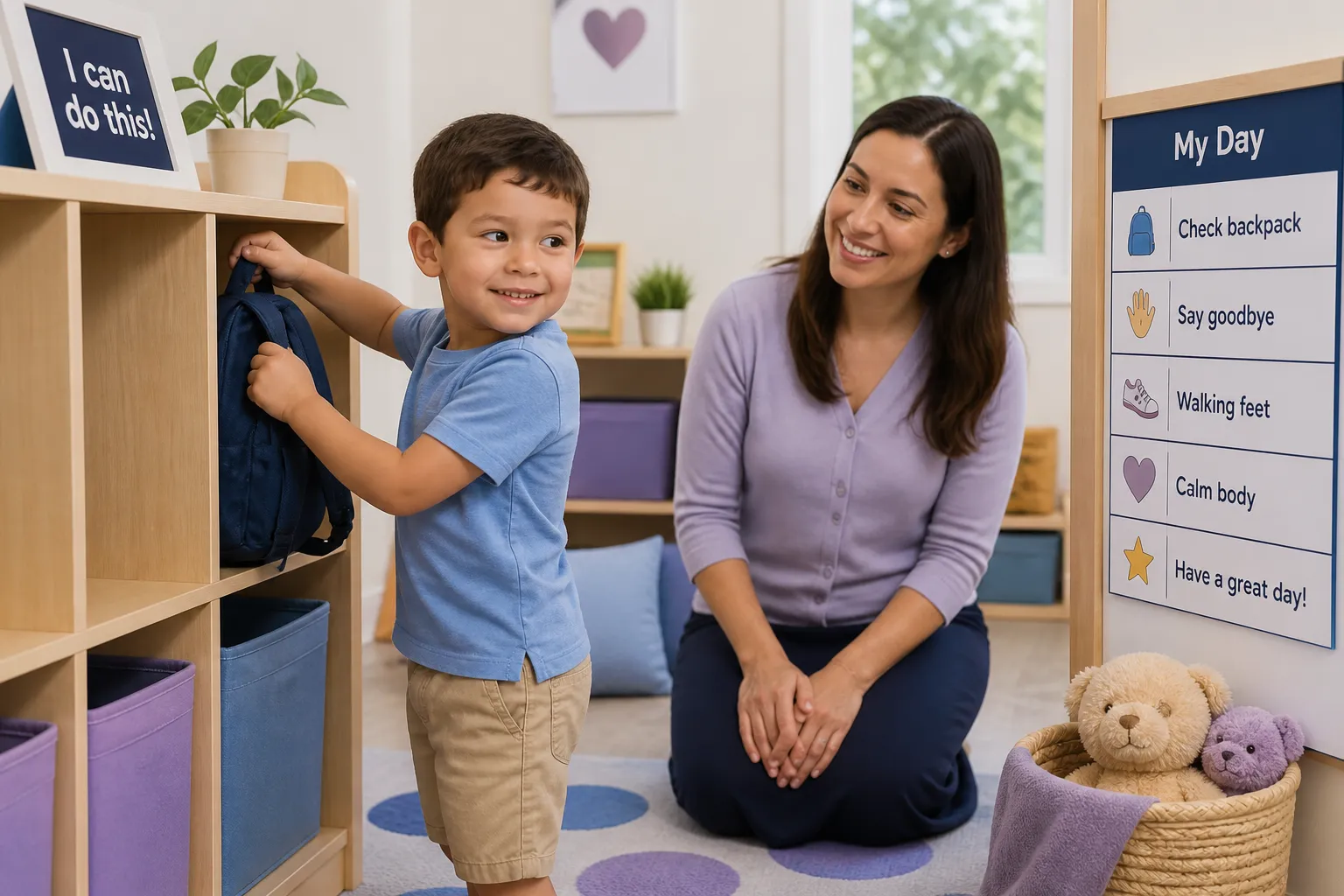
If you’re looking ahead to kindergarten and wondering whether your child will be ready for the pace, routines, and social demands of the classroom, you’re not alone. ABA therapy can help by building the everyday skills that make school feel more manageable, including communication, transitions, regulation, and independence. At Able Minds ABA, that support is meant to connect home, therapy, and school so progress carries into real life.
Quick Summary
- Kindergarten readiness is about more than academics. It also includes communication, routines, transitions, and self-help skills.
- ABA can break bigger concerns into smaller, teachable steps that make daily classroom life feel more manageable.
- Support tends to work best when families, therapists, and school teams stay aligned.
- Needing support before kindergarten does not mean a child is not ready. It means they may benefit from a clearer plan.
What School Readiness Really Means Before Kindergarten
When many parents think about kindergarten readiness, they picture letters, numbers, and early writing skills. Those things matter, but they are only part of the picture. In real classrooms, readiness often depends just as much on whether a child can participate in the day. Can they follow a simple direction, move from one activity to the next, wait briefly, ask for help, and handle common changes in routine?
Those non-academic demands matter because kindergarten moves quickly. Children are expected to transition with a group, tolerate noise, recover after redirection, and manage basic self-help tasks in a busy environment. For many autistic children, those daily participation skills shape the school day more than whether they already know the alphabet.
For children around ages 4 to 5, readiness usually means growing consistency, not doing everything independently. A child can still need prompts, visuals, or extra support and be ready to start school with a thoughtful plan in place. If you’d like a broader look at the preschool-to-kindergarten transition, this guide on moving from preschool to kindergarten offers helpful context.
How ABA Therapy Supports School Readiness
ABA helps children build and generalize the skills that make the kindergarten day feel more manageable. A BCBA can take a broad concern like “transitions are hard” or “my child struggles in groups” and turn it into specific, observable goals that can be practiced over time.
That work may focus on communication, waiting, classroom routines, emotional regulation, peer interaction, and independence with everyday tasks. RBTs help the child practice those skills during real routines, while the BCBA adjusts support based on progress and what is getting in the way.
At Able Minds ABA, school readiness is not treated as something that happens only during therapy sessions. The goal is to connect home, therapy, and school so a child can use those skills where they matter most. When families want support that carries more directly into the classroom, school-based ABA support in Maryland can help reinforce readiness goals in a natural school setting.
ABA is not a guarantee of a smooth transition, and it is not the same for every child. Still, it can be a practical way to reduce friction, build confidence, and support more meaningful participation before kindergarten begins.
The Ready for the Room Framework
One useful way to think about readiness is through The Ready for the Room Framework. This is not a pass-or-fail screen. It is a simple way to notice where support may help most before school starts.
Join the Routine
Kindergarten runs on shared rhythms, like lining up, joining circle time, cleaning up, and moving into group activities. A child does not need to do every routine without help, but they do need some ability to step into those moments without becoming overwhelmed every time.
ABA can break those routines into smaller steps and teach them through repetition, visuals, modeling, and predictable practice. If routines are one of the biggest sticking points right now, this article on getting comfortable with school structure goes deeper.
Say and Show Needs
In kindergarten, adults are supporting many children at once. That makes functional communication especially important. A child needs some reliable way to ask for help, show discomfort, request a break, or communicate confusion.
For some children, that means spoken words. For others, it may mean gestures, visuals, or another supported communication system. ABA in this area is about helping communication work in real life, not just in a therapy room. Families who need more support here may find this guide on helping a child express their needs useful.
Handle the Shift
A child may know a skill and still struggle when the environment changes quickly. That is why transitions, waiting, redirection, sensory stress, and unexpected changes matter so much before kindergarten.
ABA can support this by teaching transition routines, flexibility, waiting skills, and recovery after frustration. If this is the area that feels hardest at home or in preschool, this article on handling unexpected changes is a helpful follow-on resource.
Do the Small Independence Tasks
Opening a snack container, washing hands, managing toileting steps, putting away materials, and carrying basic belongings may seem small, but they can shape how smoothly the school day goes. These are participation skills, not just home habits.
ABA can teach those routines through step-by-step practice and gradual fading of help. Independence does not need to be all or nothing. Even partial independence can make a meaningful difference. For more on this area, this piece on building self-care skills through ABA is a useful next read.
Bridge Home to School
A skill that shows up at home does not always show up in a classroom. Different adults, materials, and expectations can change how a child responds. That is why carryover matters.
Before kindergarten starts, it helps when families, therapists, and school staff use similar language for routines, expectations, and supports. If you want a closer look at how to carry skills from home into the classroom, that resource offers a concise overview.
Signs a Child May Benefit From Extra Readiness Support Before Kindergarten
Many children have a few rough spots before kindergarten, and that alone does not mean something is wrong. What matters most is whether the same challenges keep interfering with daily participation.
Extra readiness support may be worth exploring if a child regularly becomes distressed during transitions, struggles to join group routines, rarely asks for help when needed, depends heavily on adults for simple classroom-type tasks, or has a hard time recovering after correction, noise, or changes in plan.
This is not about labeling a child as behind. It is about noticing where a little more support could make the school day feel more manageable and less stressful.
How Parents Can Reinforce Readiness at Home and With Their Child’s Team
Parents do not need to recreate therapy at home to help with readiness. In most cases, small, repeatable routines matter more than doing everything at once.
You can practice 1 to 2 step directions during everyday moments, create short waiting opportunities, build simple clean-up routines, and give your child chances to ask for help before stepping in. Dressing, toileting, handwashing, and snack routines are also good places to support growing independence.
It also helps to ask preschool or pre-K staff a few focused questions: Which routines are hardest right now? Does support break down more during communication, transitions, group participation, or independence? Those conversations can make it easier to decide what kind of support would be most useful next.
Decision Tool: Kindergarten Readiness Checklist Through an ABA Lens
Use this checklist to organize what you are seeing before pre-K conferences, summer planning, or transition conversations. It is not a diagnostic score. It is simply a way to sort concerns into likely on track, practice and monitor, or worth discussing now.
- Following 1 to 2 step directions: Can your child respond with some consistency in familiar routines?
- Separating from a caregiver with support: Can they settle with another adult or activity after a short routine?
- Transitioning between activities: Can they leave one task and move to the next with reminders or visuals?
- Waiting briefly: Can they tolerate short pauses for turns, help, or materials?
- Joining group instruction: Can they take part in a short shared activity such as circle time or clean-up?
- Asking for help: Do they have a reliable way to request help, a break, or clarification?
- Handling frustration: Can they recover from small disappointments or correction with support?
- Interacting with peers: Can they tolerate proximity, short exchanges, or simple turn-taking?
- Toileting and handwashing: Can they complete some or most self-help steps within a routine?
- Managing lunch or belongings: Can they carry basic items, open some containers, and take part in clean-up?
Questions to ask a preschool teacher or therapist:
- Which routines seem easiest right now?
- Where do you see the biggest breakdowns?
- What support helps most when my child gets stuck?
- Which skill would make the biggest difference before kindergarten starts?
- Are there strategies we should use the same way at home and school?
How School-Based ABA Can Support the Kindergarten Transition in Maryland
Some children only need extra practice at home before kindergarten. Others benefit from support that carries more directly into the school environment.
In Maryland, school-based ABA can help children practice communication, transitions, classroom participation, and independence in the settings where those skills are actually needed. It can also help families, therapists, and school teams stay more aligned around what support looks like during the school day.
Not every child needs school-based ABA to start kindergarten successfully. But when readiness concerns keep showing up across settings, school-based ABA therapy in Maryland can be a practical next step to explore.
FAQ
What is ABA therapy for school readiness?
ABA therapy for school readiness focuses on the functional skills that help a child participate in kindergarten, including communication, routines, regulation, and independence.
How does ABA help prepare a child for kindergarten?
ABA helps by turning broad concerns into specific goals, then practicing those skills in manageable steps across home, therapy, and sometimes school settings.
What skills are taught in an ABA school readiness program?
Common focus areas include following directions, asking for help, waiting, joining group activities, managing transitions, handling self-help routines, and building peer interaction.
How do I know if my child may need extra readiness support before kindergarten?
Support may be worth exploring if your child has persistent difficulty with transitions, group participation, communication, self-help routines, or recovering after frustration, and those patterns keep affecting daily participation.
Can ABA help with transitions, routines, and classroom behavior?
Yes. ABA can help children practice what to do during transitions, how to respond to routines, and how to use communication and coping strategies when things change.
How does school-based ABA support children in Maryland classrooms?
School-based ABA in Maryland can help children practice readiness skills in real school routines while families, therapists, and school teams stay aligned on support strategies. If you want a clearer picture of how that works, this Maryland school-based ABA page is the best next place to start.
Final Thoughts
Kindergarten readiness is not about checking every box before the first day. It is about understanding which skills will help your child participate more comfortably, where support is still needed, and how to build that support without shame or pressure. If you want help turning readiness concerns into a practical plan, Able Minds ABA offers school-based ABA support in Maryland that connects home, therapy, and classroom goals in a more meaningful way.
