


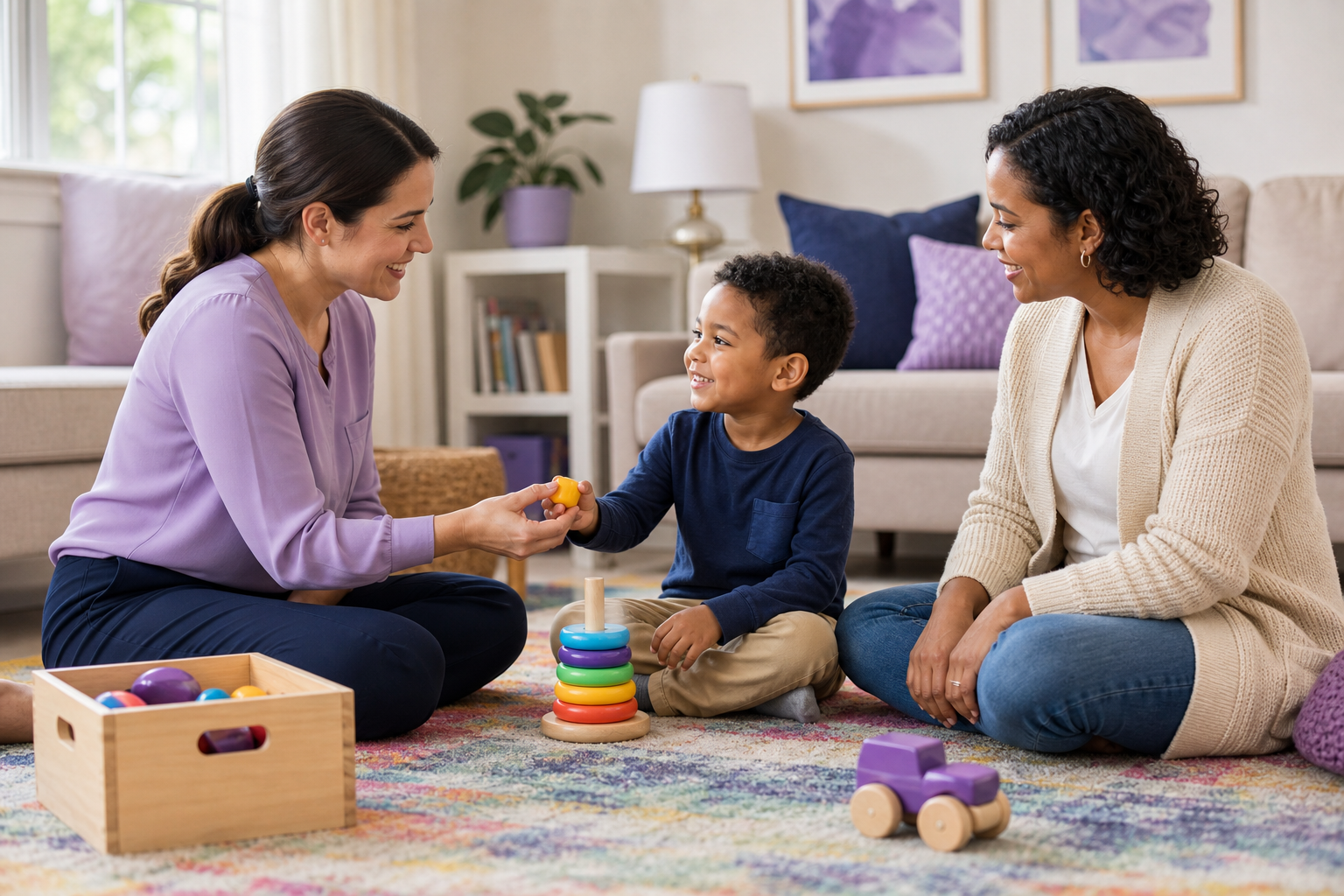
Home-based ABA therapy brings individualized, BCBA-led support into the routines where a child or young adult is learning and participating: getting ready for school, communicating at meals, transitioning between activities, building self-care skills, or practicing community routines. For families exploring autism therapy in Crofton, MD, the right setting and level of support depend on assessment, the learner’s preferences, and the family’s priorities, not a universal formula.
It is understandable to feel unsure about where to begin. Many families are balancing diagnosis questions, difficult routines, school demands, insurance concerns, and uncertainty about what therapy will feel like at home. Able Minds ABA approaches that decision as a parent-professional partnership. This guide explains what home-based support can look like, how the intake process works, and what to ask when comparing settings. For current location and service details, visit the Crofton ABA therapy page.
Quick Facts
- Setting: Home-based ABA connects skill practice to everyday routines. School-based, community-based, center-based, and telehealth support may serve different purposes.
- People involved: A BCBA may assess and oversee the program, an RBT may support daily implementation where appropriate, and caregivers and school teams may contribute with consent.
- Common goals: Communication, social participation, daily living, transitions, safety, regulation, learning, and independence when identified through assessment.
- Age and stage: Able Minds ABA serves children and young adults ages 2–21. Goals and schedules should reflect the learner’s age, communication style, preferences, and support needs.
- Access: Insurance, diagnosis documentation, prior authorization, network status, cost-sharing, service area, and availability require plan- and provider-specific verification.
- Next step: A first conversation can help your family decide whether home-based ABA is a reasonable fit before choosing a service mix.
What Home-Based ABA Therapy Looks Like for Crofton Families
Home-based ABA is individualized skill support delivered where daily life happens. In a Crofton home, that might mean practicing functional communication during breakfast, supporting a transition after school, building independence with dressing or homework, or helping a learner participate safely in a family or community routine. The goal is not to follow a rigid script. The team identifies meaningful, observable goals and adapts supports to the learner and family.
The home setting gives the team a chance to see familiar routines and real schedule demands. It also calls for honest conversations about privacy, caregiver capacity, timing, and which spaces feel comfortable. Goals may range from early communication and play to school participation, self-advocacy, organization, community participation, or daily-living independence.
ABA can be structured and evidence-informed without being one-size-fits-all. A thoughtful plan considers the learner’s preferences, autonomy, assent, and family priorities. It does not promise a cure or a fixed outcome. Families who want broader background can read this Maryland parent’s guide to choosing ABA care.
The Crofton Daily-Rhythm Fit Path
The Crofton Daily-Rhythm Fit Path is a simple way to organize questions before or during intake. It can help a family describe what matters most, but it does not replace a BCBA assessment.
Name the moment
Start with the routine that feels hardest or matters most right now. Is it communication, transitions, self-care, safety, play, homework, after-school regulation, or community participation? Turning a broad concern into a functional question can make the next conversation more useful. The learner’s communication style, preferences, and assent belong in that conversation too.
Match the setting
Ask where the skill is needed, where the learner feels comfortable, and what the family can realistically sustain. Home, school-linked, community, center-based, and telehealth settings may serve different roles. No setting is universally better. Assessment, family priorities, permissions, logistics, and provider capability all shape the recommendation.
Connect the team
The BCBA, RBT, caregiver, and school team may each contribute different information. Parents can share observations and practice agreed-upon strategies without being expected to become therapists. School communication should be consent-based and respect everyone’s role. For a broader look at carrying skills across settings, see this guide to bridging home and classroom support.
Check practical fit
Talk through service area, schedule, caregiver availability, privacy, diagnosis documentation, insurance, prior authorization, cost-sharing, and age or stage fit. Confirm current availability directly rather than relying on an old city list or an assumed start date.
Confirm real-life progress
Progress is more than what happens during a session. The team may review data, caregiver observations, and skill use across home, school, and community settings. Goals and supports can change as needs change. A collaborative plan is meant to be revisited, not treated as a one-time decision with a guaranteed timeline.
What to Expect From the First Conversation Through Ongoing Care
One family’s path may not look exactly like another’s, but the process often includes these steps:
- First conversation: Share the learner’s age, routines, current supports, priorities, location, and the question you need answered first.
- Records and eligibility review: The provider may ask for diagnostic records or other documentation. Clinical assessment and diagnosis are separate, and requirements vary.
- Benefits verification: Confirm network status, covered services, documentation, prior authorization, cost-sharing, and claims procedures. The Insurance We Accept page is a useful starting point for current information, and the Able Minds team can explain what paperwork or authorization steps may be involved.
- BCBA assessment: A BCBA may gather baseline information through interviews, records, observation, and family input, then develop functional goals and a tailored Plan of Care.
- Initial sessions: Early visits may include introductions, rapport-building, observation, goal practice, caregiver participation, and schedule adjustments. This overview of what to expect from a first in-home ABA session covers that stage in more detail.
- Ongoing review: The BCBA provides oversight, an RBT may implement the plan where appropriate, and caregivers may receive coaching, updates, and opportunities to share what they are seeing.
Intake questions and goals differ by age and stage. Service intensity and duration should be determined through assessment, authorization, family capacity, and observed need, not a universal number of hours.
What Skills and Routines May Be Addressed at Home?
Possible functional goal areas include:
- Communication: Making requests or choices, understanding routines, expressing needs, or using alternative communication supports when relevant.
- Social participation: Play, turn-taking, shared activities, sibling or peer interaction, and meaningful participation in the community.
- Transitions and regulation: Moving between activities, handling changes, communicating discomfort, and building safe coping or regulation supports.
- Daily living and independence: Dressing, hygiene, meals, organization, homework routines, and other practical skills selected with the learner and family.
- Safety and functional learning: Safety awareness, problem-solving, following meaningful routines, and participating at home, school, or in the community.
These are examples, not promises. Goals should be functional, observable, measurable, respectful, and meaningful to the learner. Quiet compliance alone is not the measure of success.
Home-Based, School-Based, Community-Based, Center-Based, or Telehealth: Which Setting Fits?
Compare settings by fit rather than ranking them:
- Home-based: Connects practice to family routines, familiar materials, caregiver context, privacy, and scheduling. It may not be the best setting for every goal or family.
- School-linked: Can support classroom participation and coordination with teachers or an IEP team when consent, school policies, and role boundaries allow.
- Community-based: May offer practice in real-world settings when clinically appropriate and specifically available from the provider.
- Center-based: Can be useful for some families and goals. Treat it as an external comparison option unless a provider confirms that it offers center-based care.
- Telehealth: May support parent coaching and remote BCBA supervision. Consider technology, privacy, caregiver availability, and whether in-person support is needed.
For any option, ask where the skill will be practiced, what the caregiver’s role will be, how school coordination works, and who provides oversight. It is also reasonable to ask about travel, privacy, scheduling, insurance, authorization, and how progress may carry across settings. Readers who want more detail can explore in-home ABA therapy in Maryland, school-based ABA therapy in Maryland, and telehealth ABA therapy in Maryland.
Crofton and Anne Arundel Practical Fit: Family, School, Insurance, and Service Area
A local setting still needs a practical conversation
For families in Crofton and the Anne Arundel County corridor between Annapolis and Bowie, home-based care raises questions about session location, schedules, school coordination, and travel boundaries. Ask which settings are currently served, whether the schedule is realistic, and how routine changes are handled. A local address does not confirm availability for every age, setting, or schedule.
Family and school partnership
Caregivers can share observations and take part in coaching without being expected to deliver therapy independently. They should receive understandable updates and have a clear way to share what is and is not working at home. School collaboration depends on consent, team roles, and school policies. If you need a deeper school-home resource, the guide to bridging home and classroom support offers broader context.
Insurance and access questions
Maryland private insurance and Medicaid access can involve benefits, diagnosis documentation, network status, prior authorization, cost-sharing, claims, and provider availability. Coverage is not identical across plans, and approval for one service setting or intensity does not guarantee approval for another. Ask how benefits are verified and what your family should prepare. This overview of Maryland’s ABA insurance requirements provides additional context.
Crofton Home-Based ABA Fit & Start Guide
Use this parent-facing guide to prepare for an intake conversation. Compare home-based support, school-linked support, community practice, and telehealth parent coaching by asking:
- What routine or goal matters most right now?
- What age or stage considerations affect the fit?
- Where will the skill be practiced, and how comfortable is the learner there?
- What caregiver participation is realistic?
- What school coordination or permissions are needed?
- Who provides BCBA oversight and, where appropriate, RBT implementation?
- What are the travel, privacy, technology, schedule, insurance, and prior-authorization questions?
- How will the team look for meaningful progress across settings?
The start path may look like this: intake conversation → records or diagnosis review → benefits verification → BCBA assessment → individualized plan → first sessions → caregiver coaching → data review → plan updates.
Bring questions such as, “How will goals be individualized?” “How will I receive updates?” “What documents are needed?” and “How are routine or schedule changes handled?” This list of questions to ask before choosing an ABA therapist can help you prepare. When you are ready to review current location and service details, visit the Crofton ABA therapy page.
FAQ: Home-Based ABA and Autism Therapy in Crofton, MD
Is home-based ABA therapy available in Crofton and Anne Arundel County?
Service area and availability can vary by setting, age, schedule, and provider capacity. Ask Able Minds ABA to confirm whether home-based support fits your location and needs before making plans.
What does a typical home-based ABA session look like?
A session may include rapport-building, observation, routine-based skill practice, caregiver participation, and communication with the supervising BCBA. The structure depends on the learner and the goals being addressed. Read what to expect from a first in-home ABA session for a fuller overview.
What skills can home-based ABA support?
Assessment-led examples include communication, social participation, transitions, daily living, safety, regulation, learning, and independence. Goals vary by learner, age, priorities, consent, and clinical assessment.
What ages can receive ABA therapy, and how are goals individualized?
Able Minds ABA serves children and young adults ages 2–21. Early intervention may emphasize communication, play, and routines. Older learners may focus on participation, self-advocacy, organization, independence, or community skills. Plans should not assume identical goals, hours, or outcomes across ages.
Does insurance or Maryland Medicaid cover ABA therapy, and what is prior authorization?
Benefits, diagnosis documentation, network status, prior authorization, cost-sharing, and claims procedures vary by plan and provider. Verify benefits before scheduling, review the Insurance We Accept page, and ask which parts of the process the provider helps coordinate.
How do families start ABA therapy in Crofton, and how many hours might a child need?
Start with your family’s priorities, records, benefits verification, assessment, goals, and scheduling. Hours and duration are determined through assessment, authorization, family capacity, and observed need, not a universal formula. For current next-step information, visit the Crofton ABA therapy page.
If you are comparing autism therapy in Crofton, MD, a focused intake conversation can help you decide whether home-based ABA fits your family’s daily rhythm and what to verify next. The goal is a clear, collaborative plan that supports meaningful participation across the settings that matter to your family.
